The Scroll That Never Ends — On TikTok and Social Decay
We Stopped Living. We Started Recording.
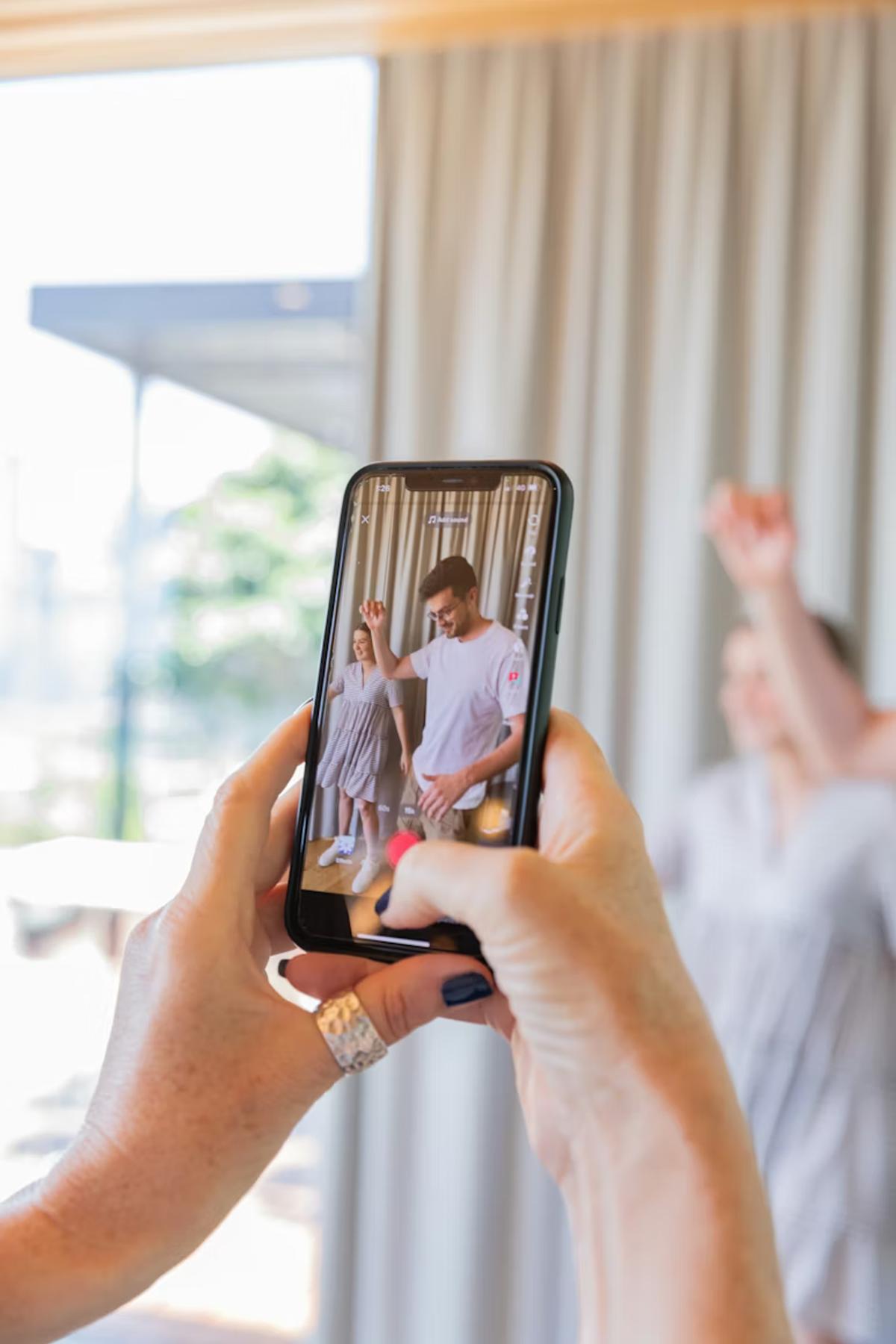
There's a moment at every concert now. The lights drop, the first notes hit, and a thousand phones go up. Not to capture a memory — but to produce content. The experience becomes secondary to its documentation. We're no longer in the moment. We're framing it, filtering it, captioning it. The sunset is only real if it's posted.
This isn't new. Instagram started this shift years ago. But TikTok accelerated it into something qualitatively different. The platform doesn't just encourage content creation — it demands it. Its algorithm rewards frequency, sensationalism, and attention at any cost. And that cost is being paid by a generation that's growing up with a fundamentally distorted relationship to reality.
The Attention Economy's Youngest Victims
Walk through any school hallway. Kids aren't passing notes anymore — they're filming each other. Sometimes for fun. Sometimes not. The same platform that surfaces dance trends and life hacks also surfaces cruelty. A classmate's embarrassing moment, recorded and uploaded in seconds, can reach thousands before the school day is over. The old schoolyard bully had a limited audience. The digital one has an infinite stage.
The consequences are devastating. Cyberbullying through short-form video is visceral in a way text never was. It's harder to deny, harder to forget, and nearly impossible to remove once it spreads. For the victim, the humiliation doesn't end when the school bell rings — it follows them home, into their bedroom, into the one place that used to be safe.
Designed to Addict, Not to Connect
TikTok's algorithm is arguably the most sophisticated attention-capture system ever built. It learns what keeps you scrolling within minutes. It doesn't optimize for your wellbeing, your education, or your relationships. It optimizes for watch time. And it's extraordinarily good at it.
The result: teenagers spending four, five, six hours a day consuming an endless stream of 30-second clips. Not learning. Not creating anything meaningful. Not connecting with the people physically around them. Just scrolling. The dopamine hit of each new video is small but constant — perfectly calibrated to keep you from putting the phone down.
Attention spans are shrinking. The ability to sit with boredom — the space where creativity is born — is disappearing. A generation is being trained to expect stimulation every second, and to feel anxious the moment it stops.
The Erosion of Presence
Look around any restaurant, any park bench, any family gathering. People sitting together, each staring at their own screen. We've normalized the idea that the digital world is more interesting than the person sitting across from us. We've accepted that it's fine to half-listen to a friend while scrolling through strangers' videos.
This isn't a moral failing of individuals. It's the predictable outcome of systems designed by some of the smartest engineers on the planet with one goal: keep eyes on screen. Blaming the user for being addicted to a product specifically engineered to be addictive is like blaming a fish for being caught by a hook.
What We Can Do
This isn't about demonizing technology or calling for bans. Social media can connect, educate, and inspire. But we need to be honest about what the current model is doing — especially to young people who don't yet have the tools to resist it.
It starts with awareness. With conversations — in families, in schools, in society — about what we're trading away when we hand over our attention. With recognizing that the urge to film every moment is the urge to perform rather than to live. With understanding that a child's phone is not a babysitter — it's a direct line to an algorithm that doesn't care about their wellbeing.
The most radical thing you can do in 2026 might be the simplest: put the phone down, look up, and be where you are.